|
|
Growing
Culinary Herbs
Culinary herbs are very
easy to grow and they give a big payoff for a small investment of time,
money and space. If you want to grow your own herbs, and you don't have
garden, you can grow a wide variety of herbs herbs in a pot, window box
or some other planter of your choice. Begin with a small potted herbs
from local nursery.
Herbs like well-draining soil and lots of sunshine. Some herbs (like
chives, parsley and cilantro) will tolerate some shade. Most herbs do
not require fertilizing, but if plants are not flourishing, try organic
emulsions available at your local garden centres.
If you plant your herb garden near the kitchen, you can enjoy the
plants and harvest the leaves easily as they reach the peak of quality.
Some that are especially popular are basil, bay leaf, parsley, thyme,
tarragon, rosemary, mint, sage, sweet marjoram, savory, oregano,
chervil, chives, and dill.
|
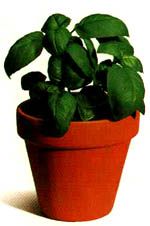
Basil
A single plant of
perennials is usually enough, but with very popular plants such as
basil, you may want more of each variety (opal basil, sweet basil,
holly basil, camphor basil, thai basil, lemon basil, greek basil etc.)
Basil -
Very good to use in tomato salads, pesto, tomato sauces, pizza,
zucchini dishes etc.
Sweet Basil
- Use in tomato and egg dishes, stews, vegetables, meats, soups, and
salads. Add a touch to hamburgers, noodles, and salad dressings.
|
|
|
|
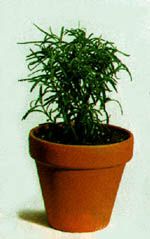
Rosemary
This woody, perennial herb with
fragrant evergreen needle-like leaves, is a member of the mint family
Lamiaceae and native to the Mediterranean region.
Add sparingly
to creamed soups, sauces, lamb, poultry, and stews.
Blend butter, parsley and
rosemary and spread on chicken thighs or breasts when roasting.
|
|
|
|
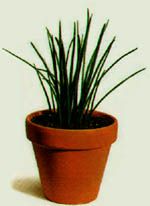
Chives
This
common household herb, frequent in gardens as well as in grocery stores
is the member of the onion family Alliaceae, and native to Europe, Asia
and North America.
Use chives as a substitute for onion. Sprinkle as a garnish over
vegetables, eggs, salads, baked potatoes, meats, and soups. It also has
insect-repelling properties which can be used in gardens to control
pests.
|
|
|
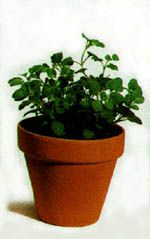
| Oregano |
|
Use for tomato dishes,
chili, pizza, meats and salads.
|
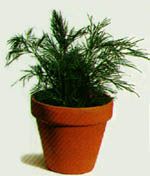
| Dill |
|
Use for sauces, cucumber
salads and preservings, egg salads, seafood dishes, potatoes, and soups.
|
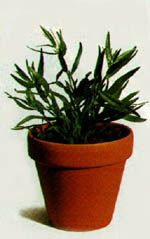
| Tarragon |
|
Tarragon is usually
blended with other herbs. Use for chicken, eggs, fish dishes,
vegetables such as asparagus, leeks, avocado, and carrots.
|
Thyme
|
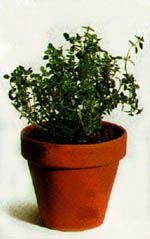 |
Thyme can be used with
meat, poultry stuffing, gravies, soups, egg and cheese dishes,
vegetables, and seafood.
|
|
