
From: The Book of Tea by Kakuzo Okakura
Tea Masters
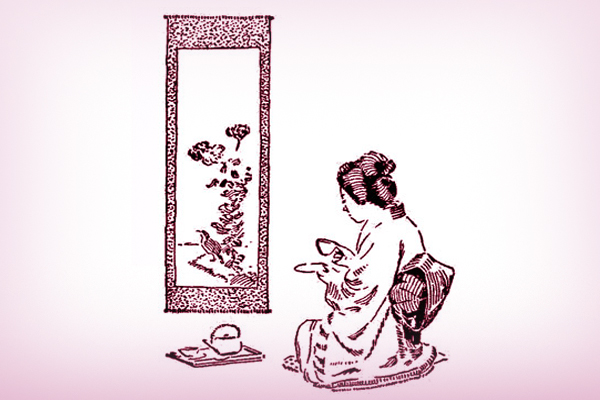
In religion the Future is behind us. In art the present is the eternal. The tea-masters held that real appreciation of art is only possible to those who make of it a living influence. Thus they sought to regulate their daily life by the high standard of refinement which obtained in the tea-room. In all circumstances serenity of mind should be maintained, and conversation should be conducted as never to mar the harmony of the surroundings. The cut and color of the dress, the poise of the body, and the manner of walking could all be made expressions of artistic personality. These were matters not to be lightly ignored, for until one has made himself beautiful he has no right to approach beauty. Thus the tea-master strove to be something more than the artist,—art itself. It was the Zen of aestheticism. Perfection is everywhere if we only choose to recognise it. Rikiu loved to quote an old poem which says: "To those who long only for flowers, fain would I show the full-blown spring which abides in the toiling buds of snow-covered hills."
Manifold indeed have been the contributions of the tea-masters to art. They completely revolutionised the classical architecture and interior decorations, and established the new style which we have described in the chapter of the tea-room, a style to whose influence even the palaces and monasteries built after the sixteenth century have all been subject. The many-sided Kobori-Enshiu has left notable examples of his genius in the Imperial villa of Katsura, the castles of Nagoya and Nijo, and the monastery of Kohoan. All the celebrated gardens of Japan were laid out by the tea-masters. Our pottery would probably never have attained its high quality of excellence if the tea-masters had not lent it to their inspiration, the manufacture of the utensils used in the tea-ceremony calling forth the utmost expenditure of ingenuity on the parts of our ceramists. The Seven Kilns of Enshiu are well known to all students of Japanese pottery. Many of our textile fabrics bear the names of tea-masters who conceived their color or design. It is impossible, indeed, to find any department of art in which the tea-masters have not left marks of their genius. In painting and lacquer it seems almost superfluous to mention the immense services they have rendered. One of the greatest schools of painting owes its origin to the tea-master Honnami-Koyetsu, famed also as a lacquer artist and potter. Beside his works, the splendid creation of his grandson, Koho, and of his grand-nephews, Korin and Kenzan, almost fall into the shade. The whole Korin school, as it is generally designated, is an expression of Teaism. In the broad lines of this school we seem to find the vitality of nature herself.
Manifold indeed have been the contributions of the tea-masters to art. They completely revolutionised the classical architecture and interior decorations, and established the new style which we have described in the chapter of the tea-room, a style to whose influence even the palaces and monasteries built after the sixteenth century have all been subject. The many-sided Kobori-Enshiu has left notable examples of his genius in the Imperial villa of Katsura, the castles of Nagoya and Nijo, and the monastery of Kohoan. All the celebrated gardens of Japan were laid out by the tea-masters. Our pottery would probably never have attained its high quality of excellence if the tea-masters had not lent it to their inspiration, the manufacture of the utensils used in the tea-ceremony calling forth the utmost expenditure of ingenuity on the parts of our ceramists. The Seven Kilns of Enshiu are well known to all students of Japanese pottery. Many of our textile fabrics bear the names of tea-masters who conceived their color or design. It is impossible, indeed, to find any department of art in which the tea-masters have not left marks of their genius. In painting and lacquer it seems almost superfluous to mention the immense services they have rendered. One of the greatest schools of painting owes its origin to the tea-master Honnami-Koyetsu, famed also as a lacquer artist and potter. Beside his works, the splendid creation of his grandson, Koho, and of his grand-nephews, Korin and Kenzan, almost fall into the shade. The whole Korin school, as it is generally designated, is an expression of Teaism. In the broad lines of this school we seem to find the vitality of nature herself.
Those of us who know not the secret of properly regulating our own existence on this tumultuous sea of foolish troubles which we call life are constantly in a state of misery while vainly trying to appear happy and contented. We stagger in the attempt to keep our moral equilibrium, and see forerunners of the tempest in every cloud that floats on the horizon. Yet there is joy and beauty in the roll of billows as they sweep outward toward eternity. Why not enter into their spirit, or, like Liehtse, ride upon the hurricane itself?
He only who has lived with the beautiful can die beautifully. The last moments of the great tea-masters were as full of exquisite refinement as had been their lives. Seeking always to be in harmony with the great rhythm of the universe, they were ever prepared to enter the unknown. The "Last Tea of Rikiu" will stand forth forever as the acme of tragic grandeur.
Long had been the friendship between Rikiu and the Taiko-Hideyoshi, and high the estimation in which the great warrior held the tea-master. But the friendship of a despot is ever a dangerous honour. It was an age rife with treachery, and men trusted not even their nearest kin. Rikiu was no servile courtier, and had often dared to differ in argument with his fierce patron. Taking advantage of the coldness which had for some time existed between the Taiko and Rikiu, the enemies of the latter accused him of being implicated in a conspiracy to poison the despot. It was whispered to Hideyoshi that the fatal potion was to be administered to him with a cup of the green beverage prepared by the tea-master. With Hideyoshi suspicion was sufficient ground for instant execution, and there was no appeal from the will of the angry ruler. One privilege alone was granted to the condemned—the honor of dying by his own hand.
On the day destined for his self-immolation, Rikiu invited his chief disciples to a last tea-ceremony. Mournfully at the appointed time the guests met at the portico. As they look into the garden path the trees seem to shudder, and in the rustling of their leaves are heard the whispers of homeless ghosts. Like solemn sentinels before the gates of Hades stand the grey stone lanterns. A wave of rare incense is wafted from the tea-room; it is the summons which bids the guests to enter. One by one they advance and take their places. In the tokonoma hangs a kakemon,—a wonderful writing by an ancient monk dealing with the evanescence of all earthly things. The singing kettle, as it boils over the brazier, sounds like some cicada pouring forth his woes to departing summer. Soon the host enters the room. Each in turn is served with tea, and each in turn silently drains his cup, the host last of all. according to established etiquette, the chief guest now asks permission to examine the tea-equipage. Rikiu places the various articles before them, with the kakemono. After all have expressed admiration of their beauty, Rikiu presents one of them to each of the assembled company as a souvenir. The bowl alone he keeps. "Never again shall this cup, polluted by the lips of misfortune, be used by man." He speaks, and breaks the vessel into fragments.
The ceremony is over; the guests with difficulty restraining their tears, take their last farewell and leave the room. One only, the nearest and dearest, is requested to remain and witness the end. Rikiu then removes his tea-gown and carefully folds it upon the mat, thereby disclosing the immaculate white death robe which it had hitherto concealed. Tenderly he gazes on the shining blade of the fatal dagger, and in exquisite verse thus addresses it:
"Welcome to thee,
O sword of eternity!
Through Buddha
And through
Dharuma alike
Thou hast cleft thy way."
With a smile upon his face Rikiu passed forth into the unknown.
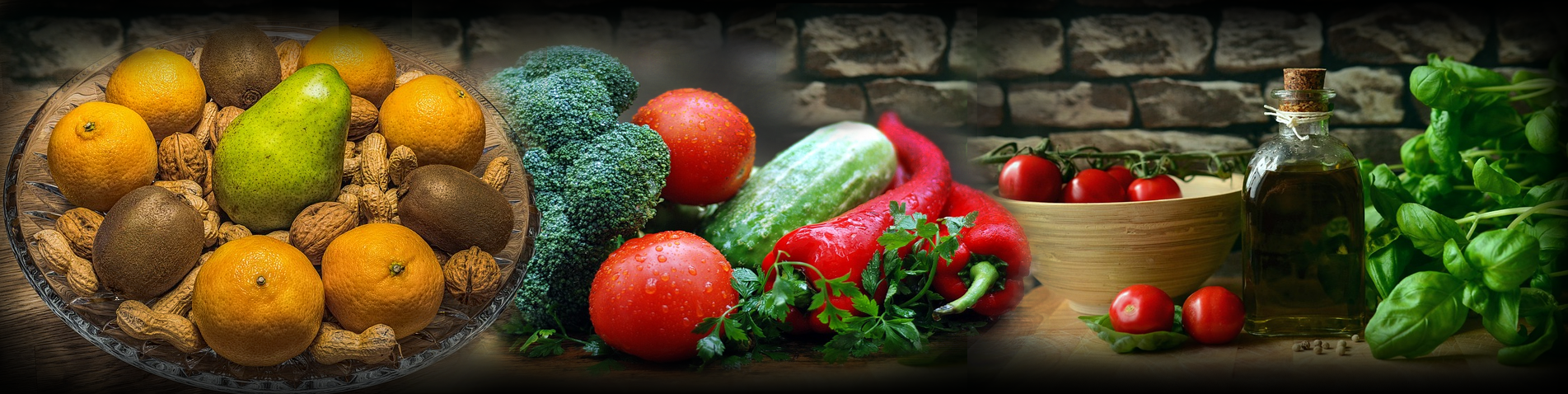
Healthy Eating
Healthy eating is a lot more delicious than you may have thought...Did You Know?
Most of us know that certain foods can be bad for our health, but did you know that certain foods may alleviate the symptoms of common health disorders like arthritis or diabetes?
A fundamental factor to managing diabetes is diet. For diabetes you should have balanced diet low in fat and sugar. Enjoy fresh green vegetables and food high in fibre.
Arthritis is associated with more than hundred types of disorders. It is characterized by joint inflammation, stiffness, swelling and pain. Anti-inflammatory foods may help ease the pain and stiffness. Cut down on foods containing animal fats and eat plenty of fish. Also try to enjoy fresh green and yellow vegetables and food high in vitamin C. We also recommend diet high in fibre like whole grains and nuts and other high-fibre low calorie food to help control weight.
To counter the effects of hypertension (high blood pressure), eat plenty of fresh vegetables, fresh fruits, legumes, low in fat and high-fibre foods. Cut down on: smoked meat, processed meat, canned and processed foods, added salt and fatty foods.