Treatments for Alcoholism
Alcohol is a legal commodity that has important role in economy, generating jobs and tax revenue for governments and creating social benefits, but it also has high potential for harm when used inappropriately. Some evidence also suggests that alcohol consumed at low to moderate levels can benefit the health of some individuals. Alcohol is also a legal psychoactive drug that enjoys enormous popularity and special social and cultural significance in many cultures all over the world. However, improper use of alcohol use is also a public health issue as it can contribute to health, moral and social harms to the drinker and their loved ones. Alcohol is involved in more traffic fatalities, regrettable moments, and crimes than all other drugs of abuse combined.
Alcoholism is a life-threatening problem that often ends in death, particularly through liver disease (such as liver cirrhosis) or kidney disease, internal bleeding, brain deterioration, alcohol poisoning, it can actually increase the risk of heart failure, stroke, and high blood pressure, as well as cause many other health problems related to alcoholism. Heavy drinking can cause many accidents and suicide.
People with alcohol use problems should not be blamed for suffering from the disease. All people make choices about whether to use alcohol or drugs. However, people do not choose how their brain and body respond to alcohol or drugs, which is why people with addiction cannot control their use while others can. People with addiction can still stop using – it's just much harder than it is for someone who has not become addicted.
Providing the best care for people with alcohol use problems requires collaboration across multiple sectors such as social services, health care, mental health, education, and criminal justice. However, a great number of people do not use available service or don't have access to the full range of services and supports they need, which extends beyond treatment into peer support, brief interventions, and continuing care.
For people who have a diagnosis of alcohol dependence, most experts will recommend stop drinking alcohol as the safest choice. It's also best for their health. Quitting is hard, which is why most health care practitioners prescribe a medication that may help people abstain. Since almost all studies of medications for alcohol dependence have included some type of counseling, it's usually recommended that all patients taking these medications receive at least brief medical counseling.
People with the most serious form of alcohol addiction usually need medications and intensive treatment followed by lifelong management of the disease. Because medications are time limited, work only while people take them, and they can cause side effects, the importance of mutual support groups like AA (Alcoholics Anonymous) increases when medications are stopped or discontinued.
Support groups like AA (Alcoholics Anonymous) include a strong spiritual component. Their approach is consistent with the medical model and abstinence (no drinking at all) is the treatment goal. Research has shown support groups like AA provide good peer support and encouragement and are very effective for those who stick with it. However, AA has high dropout rates.
Sometimes psychological treatments are used to treat alcoholism. Two common psychological treatments are:
- Cognitive Behavioural Therapy (CBT) - CBT helps addicts to change their drinking as well as their risky attitudes and beliefs. The goal of CBT can be either no drinking or moderate/controlled drinking (i.e., harm-reduction). CBT helps them to identify their own unique high-risk situations for heavy drinking and then, they develop plans and skills that are alternatives to heavy drinking in these situations. The goal of CBT is to increase people’s confidence about their ability to resist heavy drinking and relapse-prevention.
- Motivational Interviewing (MI) - MI is another effective psychological treatment. It is based on the fact that people with alcohol problems are at different stages of readiness to change their drinking. MI helps them move to a stage where they are more ready to change their alcohol use and examine the pros and cons of continuing versus changing their current drinking patterns.
People who have milder forms of alcohol abuse or dependence and are unwilling to abstain may be successful at cutting down alcohol use and some of them may recover with little or no treatment.
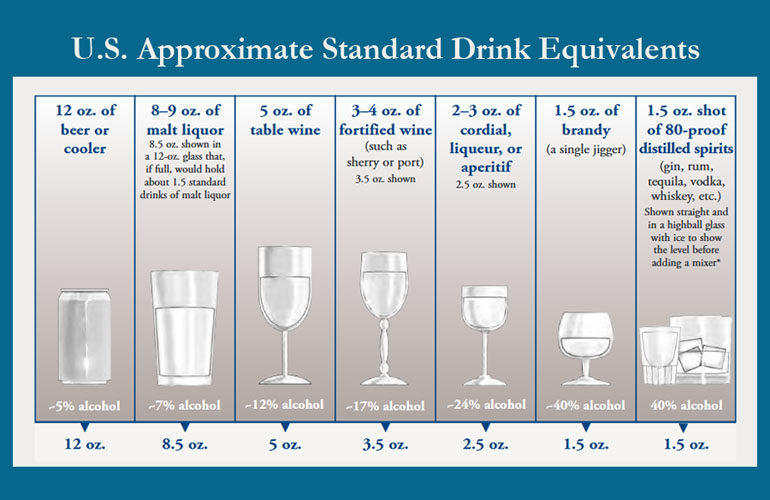
A drink is:
- a 12-ounce bottle of beer;
- a 5-ounce glass of wine; or
- a 1½-ounce shot of liquor.
These limits may be too high for some people who have certain medical problems, use medications, or who are older. Talk with your doctor about the limit that is right for you. Check drink equivalents below.
Learn more: