30 minutes
physical activity
25-38 grams of
dietary fiber per day
6-8 hours
of adequate sleep

Arthritis
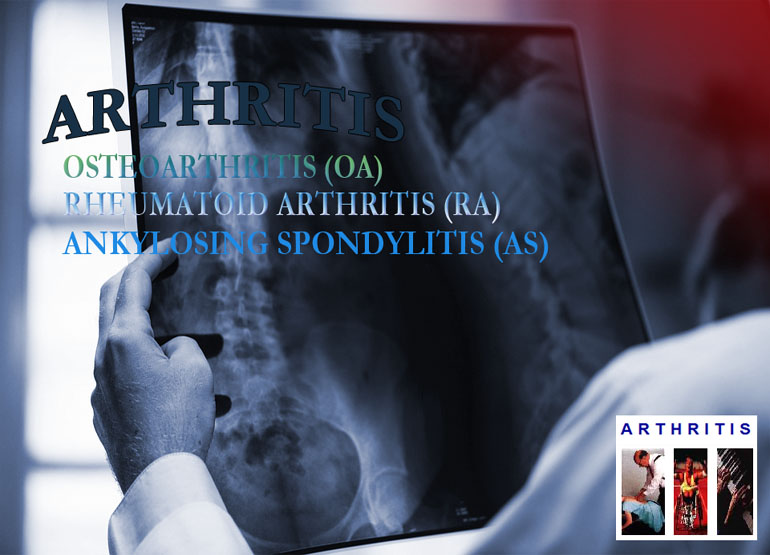
Arthritis is the most significant, treatable cause of disability in the Western world.
In all of its more than 100 forms, arthritis is one of the most common chronic conditions. It is believed that the only way to prevent arthritis is to find a cure. There is no lifestyle change you can make to prevent arthritis.
Arthritis (from Greek arthro-, joint + -itis, inflammation) is a group of conditions that affect the health of the bone joints in the body. One in three adult Americans suffer from some form of arthritis and the disease affects about twice as many women as men. Arthritic joints can be sensitive to weather changes. The increased sensitivity is thought to be caused by the affected joints developing extra nerve endings in an attempt to protect the joint from further damage.
Today thanks to research, physicians are now able to diagnose arthritis early and treat the symptoms. In most cases, treatment prevents permanent, disabling damage.
Some types of arthritis may be caused by virus or bacterium: others may be brought on by a biochemical defect. Still others may have their roots in the genetic code. Joints also may be strained simply by having to support an overweight body.
Some forms of arthritis if not properly diagnosed and treated, can be fatal.
Symptoms can be either persistent or recurrent. So even if you have discomfort that lasts for only a short while but keeps coming back, it's worth having it checked out by a doctor. All arthritides feature pain, which is generally worse in the morning and on initiating movement, and resolves in the cause of time. In elderly people and children, the pain may not be the main feature, and the patient simply moves less (elderly) or refuse to use the affected limb (children).
Other warning signs may include:
 Any kind of joint swelling
A redness or discoloration around a joint
Any discomfort that's bothersome enough to be disabling
Any kind of joint swelling
A redness or discoloration around a joint
Any discomfort that's bothersome enough to be disabling
In Children:
Not crawling and walking
Limping or not taking part in usual activities
Persistent irritability, crying, discomfort
It is very important to learn how to live well with arthritis. Until now doctors could only really deliver symptomatic care for arthritis, including exercise, pain relief, anti-inflammatory medication and improving joint mobility.
New developments may make it possible to tackle the pain and inflammation - causing mechanisms at a much earlier stage. Research is the only route to discovering new and better ways to manage and treat arthritis.
Learn more about arthritis and many other programs & resources available to you.
The most common type of arthritis is (OA) OSTEOARTHRITIS. Stress on the weight - bearing joints - including hips, ankles, knees, fingers and spine - causes the breakdown of cartilage, the elastic - like pads that act as shock absorbers in the joints. Injuries, often from sports and the repetitive activities involved in some occupations, such as construction work and house painting account for many cases of osteoarthritis. Unlike the autoimmune diseases, osteoarthritis largely affects older people and results from the degeneration of joint cartilage.
The second most common type of arthritis is (RA) RHEUMATOID ARTHRITIS, on the other hand is an auto immune disease, caused when the immune system actually turns on the body and starts to attack the joints and lead to substantive loss of mobility due to pain and joint destruction. RA is a disabling and painful inflammatory condition, which affects women three times more than men.
Other most common types of arthritis that are classified as auto immune diseases include (AS) ANKYLOSING SPONDYLITIS, which causes inflammation in the spinal joints. Ankylosing spondylitis (AS) is a chronic, progressive inflammatory arthritis primarily affecting spine and sacroiliac joints, causing eventual fusion of the spine. Complete fusion results in a complete rigidity of the spine, a condition known as bamboo spine. AS does tend to run in families and affects many more males than females. Physical therapy and exercise, along with medication, are at the heart of therapy for ankylosing spondylitis.
Recommended Reading:

It is quite true that the more you travel, the more interested in travel you are. No matter how many times you visited interesting places, there is always something new to be discovered. Learn more about your destination before your trip and make it even more enjoyable and practical.
Find out more