
Health Pages
Diabetes
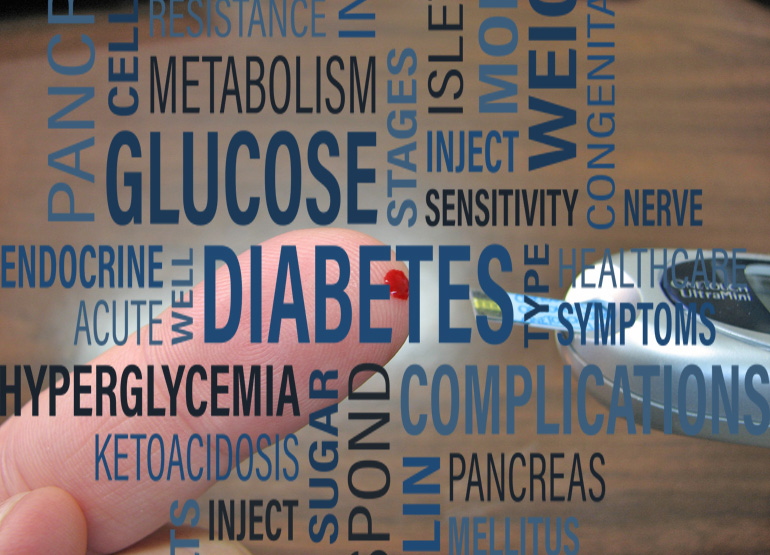
Diabetes
Diabetes is a chronic disease that affects the body's ability to use glucose (sugar) for fuel. It is characterized by elevated blood glucose levels due to insufficient supply or action of insulin.
Insulin, a substance produced by the pancreas, enables your body to use sugar for energy. When a person has diabetes, the pancreas is either not producing enough insulin, or the body is unable to use what it produces effectively. When insulin is not available, the sugar from the food you eat stays in your blood-stream, causing blood sugar levels to rise.
Having diabetes doubles the risk of cardiovascular disease (CVD) for men and triples the risk for women.
Diabetes is a serious problem. With help and education, people with diabetes can live full and satisfying lives. If they succeed, all society will benefit.
YOU MAY HAVE A HIGHER RISK OF DEVELOPING TYPE 2 DIABETES IF:
 You are overweight.
You are inactive.
You have hypertension.
You have an immediate family member parent or sibling with diabetes.
You are of Aboriginal,"Hispanic or African descent.
You are overweight.
You are inactive.
You have hypertension.
You have an immediate family member parent or sibling with diabetes.
You are of Aboriginal,"Hispanic or African descent.
The cause of diabetes is not yet known. Four out of every ten people with diabetes will develop complications such as: cardiovascular, eye and kidney disease. By managing the diabetes disease carefully, a person can substantially reduce the risk of complications. Keep blood sugar levels as near to normal as possible to prevent complications from developing. Find out more about diabetes...
Did You Know?
"If you have type 1 diabetes, you’re INSULIN DEPENDENT! There is no pill or alternative treatment for type 1 diabetes."
RomWell Health Pages - Disclaimer
Our pages are created to provide medically accurate information that is intended to complement, not replace or substitute in any way the services of your physician. Any application of the recommendations set forth in the following pages is at the reader's discretion and sole risk. Before undergoing medical treatment, you should consult with your doctor, who can best assess your individual needs, symptoms and treatment.Acai Berry
The best acai berry products are the ones which contain 100% pure, organic and natural acai berry, and where the only processing ever done is dry freezing its pulp and skin and grinding it into powder (no laboratory processing or aditives). Look for products that are certified kosher, vegan and organic. High quality acai products have high ORAC levels. Oxygen Radical Absorbance Capacity (ORAC) is a method of measuring antioxidant capacities of different foods.
RomWell Travel Guide
It is quite true that the more you travel, the more interested in travel you are. No matter how many times you visited interesting places, there is always something new to be discovered. Learn more about your destination before your trip and make it even more enjoyable and practical.
Find out more
Browse RomWell Real Cooking