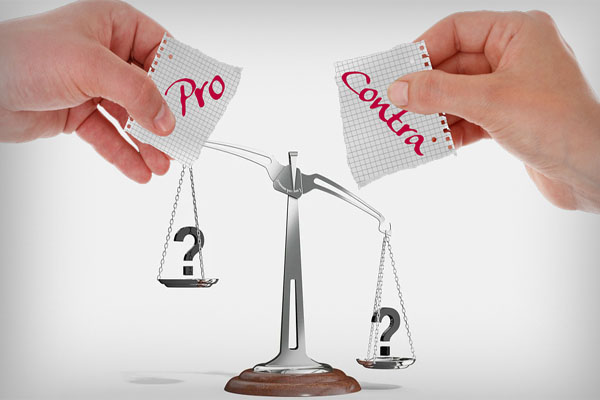
| Once you
have an idea for an enterprise - basically, you have to consider 3 options: |
STARTING
BUSINESS FROM SCRATCH |
BUYING
AN ESTABLISHED BUSINESS |
BUYING
A FRANCHISE |
| It is important to weigh
the advantages and disadvantages of all three options. |
|
|
STARTING
A BUSINESS FROM SCRATCH
|
This is the route for the
most first-time entrepreneurs. It's more challenging than the other options
and if the business is successful, the entrepreneur will have a tremendous
sense of satisfaction.
It's like dream come true.
Any business involves some element of risk, however, and starting from
scratch can be very risky, but it offers the individual the greatest amount
of personal freedom in determining company direction, development and new
markets. Risk tends to be the highest in new business and most new
businesses don't make it.
Starting a business requires
spending time on planing and clearly understanding how it will operate.
The owner manager often must be all things to the business. This means
long hours, having a clear understanding of all business aspects and a
need to follow a predetermined course. Failure to do so often leads to
a breakdown in business functions, loss of control of the business's direction
and an inability to determine where the company stands in the marketplace.
All too often, a person
with a little money and an interesting idea tries to start a new business
and ends up as an unhappy statistic after a year of operation.
ADVANTAGES
Potential
for lower overhead and lower start-up costs.
Gives ability to enter new markets or introduce new products.
Allows greatest personal freedom.
Gives ability to change business practices or directions quickly.
DISADVANTAGES
Involves
greatest risk.
Requires a significant personal and business planing.
Clientele must be developed.
|
|
BUYING
AN ESTABLISHED BUSINESS
|
Some people feel that buying
an established business is a reliable short-cut to becoming a successful
entrepreneur. The existing business offers many advantages such as an established
business method, clientele, profit picture, perhaps premises and inventory
and very often a reputable name. However, one very important question must
be answered ; why is the business for sale?
As with any short-cut, however
, there is a price to pay, and in this case there are really two
" prices ". One is money,
and the other is time and effort.
If you buy a prosperous
business, the money you give for goodwill ( the good reputation of the
business ) is paying for these advantages. This may be money well spent.
On the other hand, it may be money wasted if the business is really failing
or has unforeseen problems.
Before purchasing a business,
insist on reviewing financial statements for as many previous years as
possible ( up to five years ). Obtain lists of clients or customers and
suppliers. All leases and outstanding contracts must be reviewed.
The decision to buy should not be made lightly, get professional advice
( an accountant to review financial information and a lawyer to review
leases etc., )before purchase agreement.
ADVANTAGES
Limited
risks.
Success
of the business location has been proven.
Cash
flow begins immediately with sales to established customers.
Employees
may already be trained and knowledgeable.
New
owner inherits the goodwill and reputation.
Inventory
already exists and suppliers are known.
Relationships
with suppliers, bankers, and so on, are established.
Business
is equipped and furnished.
DISADVANTAGES
Location,
if not satisfactory, is difficult to change.
There
is potential for decrease in sales because owner's departure could result
in loss of loyal customers.
Some
employees who stayed with the business may not be assets.
Inventory
may be out of date, overpriced, or not to the new owner's liking.
Business
may require expensive modernization.
Seller
may have hidden reasons for selling business.
Each year many small businesses
are bought and sold. A lot of key issues must be considered before you
complete the final purchase. Two of the most important issues are the following:
1.
Why is the business for sale?
2.
How much should you pay for the business?
|
WHY
IS THE BUSINESS
FOR
SALE?
|
| Owners sell their business
for a variety of reasons:
The
owners wants to retire.
Too much capital is required to modernize or expand the business.
The
owner is frustrated.
The
owner is moving on to a new and more challenging business enterprise.
The
business is growing to fast for the owner to handle alone.
The
owner has lost the lease at the business present location.
New
government regulations require modification to the business ( for example,
pollution control devices or zoning restrictions ).
The
owner, a member of the owner's family, or a key employee is not well.
Competition
is increasing and causing the business' sales to fall.
The
surrounding population is changing, and newer businesses are more able
to adopt to the changing consumer tastes.
Remember,
before you invest - investigate!
|
|
HOW
MUCH SHOULD YOU PAY?
|
| Looking at the past performance
of a business can give you a great deal of information about its potential
value. If the owner refuses to show you the past records, don't buy the
business. There are many business for sale, and most owners are willing
to cooperate with serious buyers.
When reviewing the financial
history of a business, go back five years if possible. There are two main
financial statements that you or your accountant should review. Those are:
1.
BALANCE SHEET
2.
INCOME STATEMENT
The
BALANCE SHEET shows the value of the assets and liabilities of a business
on a specific date. It shows what the business is worth on that date if
the owner sold all the business's assets and paid all its bills.
The
INCOME STATEMENT indicates the amount of profit (or loss) acquired over
a period of time. Most businesses prepare an income statement every three
months to see if the business is in good financial health. The income statement
lists the income of the business along with its expenses. The difference
between income and expenses equals the profit or loss of the business.
From the balance sheet and income
statement, the owner or potential buyer of a business can find out the
following:
Whether
the expenses of the business are in line with its sales.
How much profit the business is earning.
Whether the business owes too much money.
Whether the customers are paying their bills on time.
Whether the inventory (merchandise available for sale) is selling as quickly
as it should be.
IF INTERPRETING
FINANCIAL STATEMENTS IS NOT YOUR AREA OF EXPERTISE, YOU SHOULD CONSULT
A PROFESSIONAL ACCOUNTANT BEFORE MAKING ANY PURCHASE DECISIONS. |
|
|
Tips
& Traps When Buying a Franchise
by
Mary E. Tomzack
Mary E. Tomzack is a noted franchise
expert. She is President of FranchiseHelp, Inc., an information and research
company which services prospective franchisees, multi-unit franchisees,
franchise lending companies, investors and independent businesses seeking
to become franchises. Ms. Tomzack is also the author of Going Global: Strategies
and Techniques for New Multi Nationals (published by the Economist Intelligence
Unit). She has been part-owner of two franchised businesses and previously
founded and managed a company which manufactured and marketed women’s fragrances.
If you have time to read
only one book about franchising, make it this one. Tips & Traps is
a fast read with all the information you need to make a good decision.
Insider Secrets Revealed
· How to select the
best franchise for your personal finances and lifestyle
· The hottest franchise
opportunities to take you into the 21st Century
· Sources of financing--
why it’s never been better
· How to navigate
the legal maze, understand the fine points of the franchise agreement
· How to avoid last-minute
deal breakers
· Why co-branding
makes sense
· How the franchisor’s
financials affect your business
· How to build a
business empire with franchises
· And much, much
more |
Franchising
101 by The Association of Small Business Development Centers, Ann Dugan
(Editor)
This new definitive guide provides
clear, concise explanations for finding, buying, operating & growing
a successful franchised business from top experts from the ASBDC and the
American Association of Franchisees and Dealers (AAFD).
Checklists, forms, worksheets,
and easy to follow strategies along with a sample franchise business plan
and contract allow readers to discover how to: evaluate a franchise opportunity,
develop forecasts and budgets, estimate start up costs, and get financing. |
|
FRANCHISE
|
Franchising
is essentially a marketing technique used by many companies to expand operations
(distribute products and services ) without the owners having to raise
more money or capital themselves.
Business owned as a sole
proprietorships, partnerships, and corporations can all decide to franchise
their operations. The franchisor supplies the product or service to the
franchisee who in turn makes it available to the consumers. A franchise
is license granted by a corporation to sell a particular product or a service
in a given area and in many cases provides equipment, supplies and expertise
to a franchisee in exchange for a fee and royalties on sales.
Franchising is a two-way
street. For a new franchise to succeed, the franchisee must agree to follow
all the rules and regulations set out in the agreement. In return, the
franchisor often give the franchise help to choose a good location, provide
advertising, suggest special promotions, and help to buy equipment and
supplies. What's more, a good franchisor will supervise quality control
and keep you up-to-date on new products and research. Some franchisors
even provide accounting service.
However, not all franchises
are successful. People who dream of buying a franchise should investigate
the parent organization and its rules carefully. They should also talk
to other franchisees before making a decision.
Franchising isn't for everyone.
If you are too independent and too entrepreneurial to accept rules and
regulations which someone else has instituted, then franchising may not
be for you. It is a fundamental requirement in franchise system that each
unit within that system appears to be similar in almost everything.
Although franchising is
an attractive alternative to being an entrepreneur it may still be the
risk of failure in the process of developing and a full range of support
services may not be in place. There is a considerable difference between
a mature franchisor with a successful track record in an established market
and a new franchise system based on an unproved business concept.
There are many publications
which list available franchises, in order to avoid a costly mistake just
shop around to find out franchises that best suit your skills and taste.
Hire an accountant or financial
advisor to evaluate the franchises that interest you.
Engage a lawyer who specializes
in franchise-related matters to review all of the documents and explain
every clause of the franchise agreement.
Request a list of all franchisees
with their locations and discuss with a number of them success and profitability
of their outlets.
In some ways, buying franchise
is like starting a business from scratch. In other ways it is like buying
an established business with a recognized name and product.
The cost of buying a proven
franchise is high because the risk is lower.
Many people feel that buying
a franchise is good way to get started in business. |
FRANCHISING
ADVANTAGES
Public
instantly recognizes the franchise name.
Franchisor
provides training for franchisee.
Best
locations are already researched and selected.
Even
if franchisees are inexperienced, they can use the expertise of the parent
company to help them succeed and pull in clientele.
All
operating decisions are made for the franchisee, living no guesswork when
it comes to marketing, decor, pricing etc.
A
quick return on the investment. |
FRANCHISING
DISADVANTAGES
Entrepreneur
gives up the freedom of decision-making.
The
risk is still significant.
You
may run into problems if the parent company goes bankrupt- even if you
running your own franchise business successfully.
Profits
are always shared.
Initial
capital outlay is large.
Franchise
must obtain product and / or supplies from franchisor.
Strict
rules must be adhered to. |
FRANCHISING
RULES
When a person (called the
FRANCHISEE) decides to buy a franchise, he or she enters into a licensing
agreement with the parent business (called the FRANCHISOR). The franchisee
must supply the money needed to start the franchise and must follow the
rules established by the franchisor. These rules are usually very strict
and often include details such as:
Where
the business may locate.
The
type of building that must be used.
The
suppliers that must be used.
What
equipment must be bought and from whom.
The
quality of the products sold.
The
quality of the services provided.
Special
training courses that the franchisee must attend.
The
percentage of profit or revenue that must be paid to the franchisor.
|
|
|
|