
Cakes
Cakes, Tortes, Tarts & More...
Punch Torte
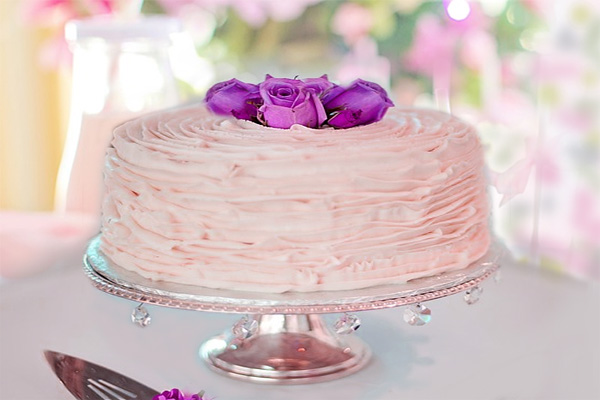
Ingredients for Cake:
1½ cups sifted all-purpose flour
10 egg yolks
10 egg whites
6 oz. granulated sugar
3 to 4 tablespoons hot water
Peel and juice of one large lemon
5 to 6 tablespoons apricot jam for spreading
Pink Icing Ingredients:
1½ cups sifted icing sugar
2-3 tablespoons rum
1 to 2 tablespoons hot water
2 to 3 drops pink food color
NOTE: It is impossible to give exact quantities for this type of icing because every sugar is different.
Punch Filling Ingredients:
2/3 cup strong dark tea
1/3 cup rum
1/2 cup granulated sugar
1/4 cup softened chocolate
2 tablespoons apricot jam
1 teaspoon almond extract
1 teaspoon vanilla sugar
Juice of one large orange
Directions for Cake Preparation:
1. Whisk egg yolks with 4 oz. (120 g) sugar, than gradually add spoon by spoon hot water and mix until mixture is thick and lemon-colored. Add peel and juice of one large lemon and mix well.
2. Preheat oven to 350º F (180º C).
3. Beat egg whites with 2 oz. (60g) sugar until stiff peaks form.
4. Slowly add sifted flour and beaten egg whites into egg yolk mixture.
5. Put mixture in two greased and floured 9-inch round cake molds and bake 30 to 35 minutes or until toothpick comes out clean when inserted.
6. Cool 2 to 3 minutes, than remove from molds and cool to room temperature.
7. Cut each cake into 3 equal layers.
8. Spread layers of one cake with warm apricot jam, and set aside.
To Prepare Punch Filling:
1. Cut layers of second cake into small cubes and put into large bowl.
2. Put tea, rum and sugar in a sauce pan and bring to boil. Pour over the cake cubes.
3. Add jam, almond extract, softened chocolate, vanilla sugar and orange juice and mix well.
4. Spread filling between layers and press down lightly each layer.
5. Press cake with some big heavy pan or wood and leave for two hours.
6. Prepare pink icing and spread over the cake.
To Prepare Pink Icing:
1. Add a very little water into sifted icing sugar, add food color and rum, than add more liquid or sugar to obtain a smooth thick paste.
2. Spread icing over the cake and leave to dry.
3. Serve cake next day.
Makes 16 servings.
Tip:
 Rich Buttercream Frosting can be used instead of Pink Icing.
RomWell Cookbook
Discover various delicious and useful recipes...Did You Know?
Onions are cultivated around the world for over 7,000 years. Their geographic origin is uncertain, but it is thought to be of central Asian origin. Some ancient records of using onions span western and eastern Asia with likely domestication worldwide.
Onion was certainly cultivated by the Egyptians as far back as 3200 BC. Egyptians made offerings of onions to their gods, took oats on an onion, they used onions as part of the mummification process and depicted the onions frequently in their tomb paintings. The ancient Egyptians also traded eight tones of gold for onions to feed builders of the pyramids. The builders of the famous pyramids at Giza were reputed to have been paid partly in onions.
Old folk healers have advocated onions as a "heart healer" and remedy for hundreds of other medical conditions including treatment of infections, wounds, curing baldness and the common cold. There is no scientific evidence to support all the claims, but some new researchers have now confirmed that an organic compound in onions, called ADENOSINE, functions as an anticoagulating agent as effective as aspirin.