
From: The Book of Tea by Kakuzo Okakura
Flowers
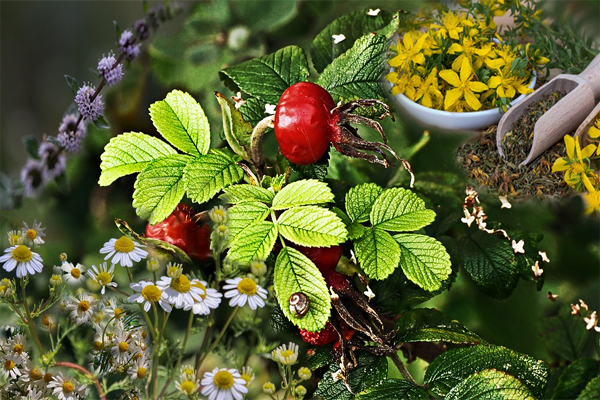
In the trembling grey of a spring dawn, when the birds were whispering in mysterious cadence among the trees, have you not felt that they were talking to their mates about the flowers? Surely with mankind the appreciation of flowers must have been coeval with the poetry of love. Where better than in a flower, sweet in its unconsciousness, fragrant because of its silence, can we image the unfolding of a virgin soul? The primeval man in offering the first garland to his maiden thereby transcended the brute. He became human in thus rising above the crude necessities of nature. He entered the realm of art when he perceived the subtle use of the useless.
In joy or sadness, flowers are our constant friends. We eat, drink, sing, dance, and flirt with them. We wed and christen with flowers. We dare not die without them. We have worshipped with the lily, we have meditated with the lotus, we have charged in battle array with the rose and the chrysanthemum. We have even attempted to speak in the language of flowers. How could we live without them? It frightens one to conceive of a world bereft of their presence.
What solace do they not bring to the bedside of the sick, what a light of bliss to the darkness of weary spirits? Their serene tenderness restores to us our waning confidence in the universe even as the intent gaze of a beautiful child recalls our lost hopes. When we are laid low in the dust it is they who linger in sorrow over our graves.
Sad as it is, we cannot conceal the fact that in spite of our companionship with flowers we have not risen very far above the brute. Scratch the sheepskin and the wolf within us will soon show his teeth. It has been said that a man at ten is an animal, at twenty a lunatic, at thirty a failure, at forty a fraud, and at fifty a criminal. Perhaps he becomes a criminal because he has never ceased to be an animal. Nothing is real to us but hunger, nothing sacred except our own desires. Shrine after shrine has crumbled before our eyes; but one altar is forever preserved, that whereon we burn incense to the supreme idol,—ourselves. Our god is great, and money is his Prophet! We devastate nature in order to make sacrifice to him. We boast that we have conquered Matter and forget that it is Matter that has enslaved us. What atrocities do we not perpetrate in the name of culture and refinement!
Tell me, gentle flowers, teardrops of the stars, standing in the garden, nodding your heads to the bees as they sing of the dews and the sunbeams, are you aware of the fearful doom that awaits you? Dream on, sway and frolic while you may in the gentle breezes of summer. To-morrow a ruthless hand will close around your throats. You will be wrenched, torn asunder limb by limb, and borne away from your quiet homes. The wretch, she may be passing fair. She may say how lovely you are while her fingers are still moist with your blood. Tell me, will this be kindness? It may be your fate to be imprisoned in the hair of one whom you know to be heartless or to be thrust into the buttonhole of one who would not dare to look you in the face were you a man. It may even be your lot to be confined in some narrow vessel with only stagnant water to quench the maddening thirst that warns of ebbing life.
Flowers, if you were in the land of the Mikado, you might some time meet a dread personage armed with scissors and a tiny saw. He would call himself a Master of Flowers. He would claim the rights of a doctor and you would instinctively hate him, for you know a doctor always seeks to prolong the troubles of his victims. He would cut, bend, and twist you into those impossible positions which he thinks it proper that you should assume. He would contort your muscles and dislocate your bones like any osteopath. He would burn you with red-hot coals to stop your bleeding, and thrust wires into you to assist your circulation. He would diet you with salt, vinegar, alum, and sometimes, vitriol. Boiling water would be poured on your feet when you seemed ready to faint. It would be his boast that he could keep life within you for two or more weeks longer than would have been possible without his treatment. Would you not have preferred to have been killed at once when you were first captured? What were the crimes you must have committed during your past incarnation to warrant such punishment in this?
The wanton waste of flowers among Western communities is even more appalling than the way they are treated by Eastern Flower Masters. The number of flowers cut daily to adorn the ballrooms and banquet-tables of Europe and America, to be thrown away on the morrow, must be something enormous; if strung together they might garland a continent. Beside this utter carelessness of life, the guilt of the Flower-Master becomes insignificant. He, at least, respects the economy of nature, selects his victims with careful foresight, and after death does honour to their remains. In the West the display of flowers seems to be a part of the pageantry of wealth,—the fancy of a moment. Whither do they all go, these flowers, when the revelry is over? Nothing is more pitiful than to see a faded flower remorselessly flung upon a dung heap.
Why were the flowers born so beautiful and yet so hapless? Insects can sting, and even the meekest of beasts will fight when brought to bay. The birds whose plumage is sought to deck some bonnet can fly from its pursuer, the furred animal whose coat you covet for your own may hide at your approach. Alas! The only flower known to have wings is the butterfly; all others stand helpless before the destroyer. If they shriek in their death agony their cry never reaches our hardened ears. We are ever brutal to those who love and serve us in silence, but the time may come when, for our cruelty, we shall be deserted by these best friends of ours. Have you not noticed that the wild flowers are becoming scarcer every year? It may be that their wise men have told them to depart till man becomes more human. Perhaps they have migrated to heaven.
Much may be said in favor of him who cultivates plants. The man of the pot is far more humane than he of the scissors. We watch with delight his concern about water and sunshine, his feuds with parasites, his horror of frosts, his anxiety when the buds come slowly, his rapture when the leaves attain their lustre. In the East the art of floriculture is a very ancient one, and the loves of a poet and his favorite plant have often been recorded in story and song. With the development of ceramics during the Tang and Sung dynasties we hear of wonderful receptacles made to hold plants, not pots, but jewelled palaces. A special attendant was detailed to wait upon each flower and to wash its leaves with soft brushes made of rabbit hair. It has been written ["Pingtse", by Yuenchunlang] that the peony should be bathed by a handsome maiden in full costume, that a winter-plum should be watered by a pale, slender monk. In Japan, one of the most popular of the No-dances, the Hachinoki, composed during the Ashikaga period, is based upon the story of an impoverished knight, who, on a freezing night, in lack of fuel for a fire, cuts his cherished plants in order to entertain a wandering friar. The friar is in reality no other than Hojo-Tokiyori, the Haroun-Al-Raschid of our tales, and the sacrifice is not without its reward. This opera never fails to draw tears from a Tokio audience even to-day.
Great precautions were taken for the preservation of delicate blossoms. Emperor Huensung, of the Tang Dynasty, hung tiny golden bells on the branches in his garden to keep off the birds. He it was who went off in the springtime with his court musicians to gladden the flowers with soft music. A quaint tablet, which tradition ascribes to Yoshitsune, the hero of our Arthurian legends, is still extant in one of the Japanese monasteries [Sumadera, near Kobe]. It is a notice put up for the protection of a certain wonderful plum-tree, and appeals to us with the grim humour of a warlike age. After referring to the beauty of the blossoms, the inscription says: "Whoever cuts a single branch of this tree shall forfeit a finger therefor." Would that such laws could be enforced nowadays against those who wantonly destroy flowers and mutilate objects of art!
Yet even in the case of pot flowers we are inclined to suspect the selfishness of man. Why take the plants from their homes and ask them to bloom mid strange surroundings? Is it not like asking the birds to sing and mate cooped up in cages? Who knows but that the orchids feel stifled by the artificial heat in your conservatories and hopelessly long for a glimpse of their own Southern skies?
The ideal lover of flowers is he who visits them in their native haunts, like Taoyuenming [all celebrated Chinese poets and philosophers], who sat before a broken bamboo fence in converse with the wild chrysanthemum, or Linwosing, losing himself amid mysterious fragrance as he wandered in the twilight among the plum-blossoms of the Western Lake. 'Tis said that Chowmushih slept in a boat so that his dreams might mingle with those of the lotus. It was the same spirit which moved the Empress Komio, one of our most renowned Nara sovereigns, as she sang: "If I pluck thee, my hand will defile thee, O flower! Standing in the meadows as thou art, I offer thee to the Buddhas of the past, of the present, of the future."
However, let us not be too sentimental. Let us be less luxurious but more magnificent. Said Laotse: "Heaven and earth are pitiless." Said Kobodaishi: "Flow, flow, flow, flow, the current of life is ever onward. Die, die, die, die, death comes to all." Destruction faces us wherever we turn. Destruction below and above, destruction behind and before. Change is the only Eternal,—why not as welcome Death as Life? They are but counterparts one of the other,—The Night and Day of Brahma. Through the disintegration of the old, re-creation becomes possible. We have worshipped Death, the relentless goddess of mercy, under many different names. It was the shadow of the All-devouring that the Gheburs greeted in the fire. It is the icy purism of the sword-soul before which Shinto-Japan prostrates herself even to-day. The mystic fire consumes our weakness, the sacred sword cleaves the bondage of desire. From our ashes springs the phoenix of celestial hope, out of the freedom comes a higher realisation of manhood.
Why not destroy flowers if thereby we can evolve new forms ennobling the world idea? We only ask them to join in our sacrifice to the beautiful. We shall atone for the deed by consecrating ourselves to Purity and Simplicity. Thus reasoned the tea-masters when they established the Cult of Flowers.
Anyone acquainted with the ways of our tea- and flower-masters must have noticed the religious veneration with which they regard flowers. They do not cull at random, but carefully select each branch or spray with an eye to the artistic composition they have in mind. They would be ashamed should they chance to cut more than were absolutely necessary. It may be remarked in this connection that they always associate the leaves, if there be any, with the flower, for the object is to present the whole beauty of plant life. In this respect, as in many others, their method differs from that pursued in Western countries. Here we are apt to see only the flower stems, heads as it were, without body, stuck promiscuously into a vase.
When a tea-master has arranged a flower to his satisfaction he will place it on the tokonoma, the place of honour in a Japanese room. Nothing else will be placed near it which might interfere with its effect, not even a painting, unless there be some special aesthetic reason for the combination. It rests there like an enthroned prince, and the guests or disciples on entering the room will salute it with a profound bow before making their addresses to the host. Drawings from masterpieces are made and published for the edification of amateurs. The amount of literature on the subject is quite voluminous. When the flower fades, the master tenderly consigns it to the river or carefully buries it in the ground. Monuments are sometimes erected to their memory.
The birth of the Art of Flower Arrangement seems to be simultaneous with that of Teaism in the fifteenth century. Our legends ascribe the first flower arrangement to those early Buddhist saints who gathered the flowers strewn by the storm and, in their infinite solicitude for all living things, placed them in vessels of water. It is said that Soami, the great painter and connoisseur of the court of Ashikaga-Yoshimasa, was one of the earliest adepts at it. Juko, the tea-master, was one of his pupils, as was also Senno, the founder of the house of Ikenobo, a family as illustrious in the annals of flowers as was that of the Kanos in painting. With the perfecting of the tea-ritual under Rikiu, in the latter part of the sixteenth century, flower arrangement also attains its full growth. Rikiu and his successors, the celebrated Oda-wuraka, Furuka-Oribe, Koyetsu, Kobori-Enshiu, Katagiri-Sekishiu, vied with each other in forming new combinations. We must remember, however, that the flower-worship of the tea-masters formed only a part of their aesthetic ritual, and was not a distinct religion by itself. A flower arrangement, like the other works of art in the tea-room, was subordinated to the total scheme of decoration. Thus Sekishiu ordained that white plum blossoms should not be made use of when snow lay in the garden. "Noisy" flowers were relentlessly banished from the tea-room. A flower arrangement by a tea-master loses its significance if removed from the place for which it was originally intended, for its lines and proportions have been specially worked out with a view to its surroundings.
The adoration of the flower for its own sake begins with the rise of "Flower-Masters," toward the middle of the seventeenth century. It now becomes independent of the tea-room and knows no law save that the vase imposes on it. New conceptions and methods of execution now become possible, and many were the principles and schools resulting therefrom. A writer in the middle of the last century said he could count over one hundred different schools of flower arrangement. Broadly speaking, these divide themselves into two main branches, the Formalistic and the Naturalesque. The Formalistic schools, led by the Ikenobos, aimed at a classic idealism corresponding to that of the Kano-academicians. We possess records of arrangements by the early masters of the school which almost reproduce the flower paintings of Sansetsu and Tsunenobu. The Naturalesque school, on the other hand, accepted nature as its model, only imposing such modifications of form as conduced to the expression of artistic unity. Thus we recognise in its works the same impulses which formed the Ukiyoe and Shijo schools of painting.
It would be interesting, had we time, to enter more fully than it is now possible into the laws of composition and detail formulated by the various flower-masters of this period, showing, as they would, the fundamental theories which governed Tokugawa decoration. We find them referring to the Leading Principle (Heaven), the Subordinate Principle (Earth), the Reconciling Principle (Man), and any flower arrangement which did not embody these principles was considered barren and dead. They also dwelt much on the importance of treating a flower in its three different aspects, the Formal, the Semi-Formal, and the Informal. The first might be said to represent flowers in the stately costume of the ballroom, the second in the easy elegance of afternoon dress, the third in the charming deshabille of the boudoir.
Our personal sympathies are with the flower-arrangements of the tea-master rather than with those of the flower-master. The former is art in its proper setting and appeals to us on account of its true intimacy with life. We should like to call this school the Natural in contradistinction to the Naturalesque and Formalistic schools. The tea-master deems his duty ended with the selection of the flowers, and leaves them to tell their own story. Entering a tea-room in late winter, you may see a slender spray of wild cherries in combination with a budding camellia; it is an echo of departing winter coupled with the prophecy of spring. Again, if you go into a noon-tea on some irritatingly hot summer day, you may discover in the darkened coolness of the tokonoma a single lily in a hanging vase; dripping with dew, it seems to smile at the foolishness of life.
A solo of flowers is interesting, but in a concerto with painting and sculpture the combination becomes entrancing. Sekishiu once placed some water-plants in a flat receptacle to suggest the vegetation of lakes and marshes, and on the wall above he hung a painting by Soami of wild ducks flying in the air. Shoha, another tea-master, combined a poem on the Beauty of Solitude by the Sea with a bronze incense burner in the form of a fisherman's hut and some wild flowers of the beach. One of the guests has recorded that he felt in the whole composition the breath of waning autumn.
Flower stories are endless. We shall recount but one more. In the sixteenth century the morning-glory was as yet a rare plant with us. Rikiu had an entire garden planted with it, which he cultivated with assiduous care. The fame of his convulvuli reached the ear of the Taiko, and he expressed a desire to see them, in consequence of which Rikiu invited him to a morning tea at his house. On the appointed day Taiko walked through the garden, but nowhere could he see any vestige of the convulvus. The ground had been leveled and strewn with fine pebbles and sand. With sullen anger the despot entered the tea-room, but a sight waited him there which completely restored his humour. On the tokonoma, in a rare bronze of Sung workmanship, lay a single morning-glory—the queen of the whole garden!
In such instances we see the full significance of the Flower Sacrifice. Perhaps the flowers appreciate the full significance of it. They are not cowards, like men. Some flowers glory in death—certainly the Japanese cherry blossoms do, as they freely surrender themselves to the winds. Anyone who has stood before the fragrant avalanche at Yoshino or Arashiyama must have realized this. For a moment they hover like bejewelled clouds and dance above the crystal streams; then, as they sail away on the laughing waters, they seem to say: "Farewell, O Spring! We are on to eternity."
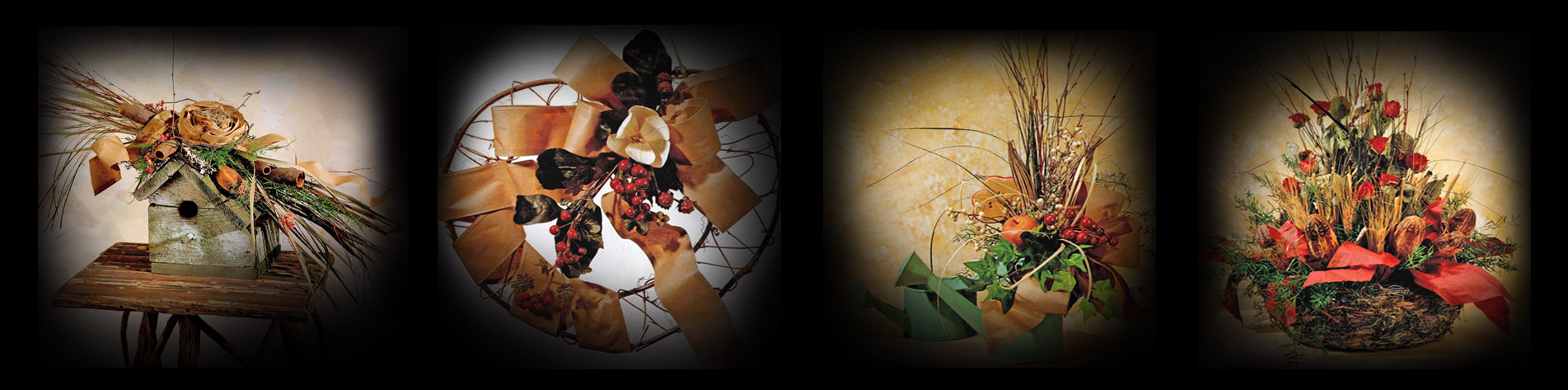
Great Craft Creations
Surprise your loved ones with great craft creations, decorate your house, or make unique gifts...Did You Know?
If you need some dry material instantly you can use your microwave oven for making what you need. To dry herbs or flowers in the microwave oven instantly you will need SILICA GEL. Silica gel is a substance used to dry delicate flowers too, such as roses or calendula, as it preserves their forms and colors well. Silica gel can usually be found in craft stores.
It is very simple to dry flowers with a silica crystals, just use microwave safe container with a 1" (2,5 cm) thick layer of the silica crystals and place your flowers on the top allowing about 1-inch of space around the sides and between each flowers. Put another 1-inch layer on the top of flowers and then microwave on cca 50 % power for approximately 2-3 minutes, depending on the type of your microwave and flowers. It is better to check the material progress an add some more times if needed. Flowers and leaves often have different drying times, microwave them separately for better result.
Never use silica gel containers for preparing food after you use them for drying flowers, because they often absorbs pesticides from plants as they dry.