Protect Your Health
Learn how to protect your most precious gift - YOUR HEALTH - to live longer, get sick less often, look better and feel more energy.
It is in your best interest to be an active participant in your health care, rather than just recipient of treatment. Active participants solicit opinions and advice, make decisions and take action. They know how to identify and manage medical problems and how to make the health care system work effectively for them.
People who manage their own health care successfully gather information and learn skills from professionals, scientists, physicians, health care providers, classes, books, websites, magazines, friends, self-help groups etc. Informed people know how to practice safe, effective self care, and they know how to make decisions about professional medical care, whether conventional Western medicine or complementary and alternative medicine.
Effectively managing medical problems also involves developing several skills like: self-care, self-assessment, decision-making, and self-treatment.
SELF-CARE - Learn how to be a good observer of your body and asses your symptoms. You must be able to decide when you can safely deal with the problem on your own and when to seek professional advice. You need to know how to safely and effectively self-treat common medical problems. Make sure you have a good relationship with your health care providers.
SELF-ASSESSMENT - Make sure you know and understand basic symptoms, their meaning and what is going on in your body to reduce anxiety about symptoms and practice safe self-care. You should begin by noting when the symptom began, when and how often it occurs, what makes it better, what makes it worse and whether you have any associated symptoms. Monitor your body's vital signs such as heart rate and temperature. Self-test blood pressure, blood sugar, pregnancy detection, urine, stool and signs of infection.
DECISION-MAKING - You should know when to see a physician or go to nearest emergency room. Always ask for professional help if your symptoms are severe, unusual, persistent, recurrent and when symptoms are accompanied with other symptoms. When you are done evaluating your symptoms, you must decide how urgent your problem is, should you ask for medical advice over the phone, go to your physician's office, or visit nearest emergency room (on your own or call someone to take you).
SELF TREATMENT - When confronted with a new symptom or single symptom that is not big concern, you should know how to help your body to heal. There are many options available like: watchful waiting, nondrug options, supplements, nonprescription medication or OTC (over-the-counter medication).
Becoming more confident of your ability to solve personal health problems involves constant learning, assessing and evaluating information. Don't be passive consumer of medicine, get involved, find answers... Don't wait, gather information and learn how to manage your medical problems.
"If we are passive consumers of medicine we will never drive up standards. If we prefer simplistic answers we will get pseudo science. If we do not promote the rigorous testing of treatments we will get pointless and sometimes dangerous treatment along with the stuff that really works."
~Nick Ross, TV and radio presenter and journalist
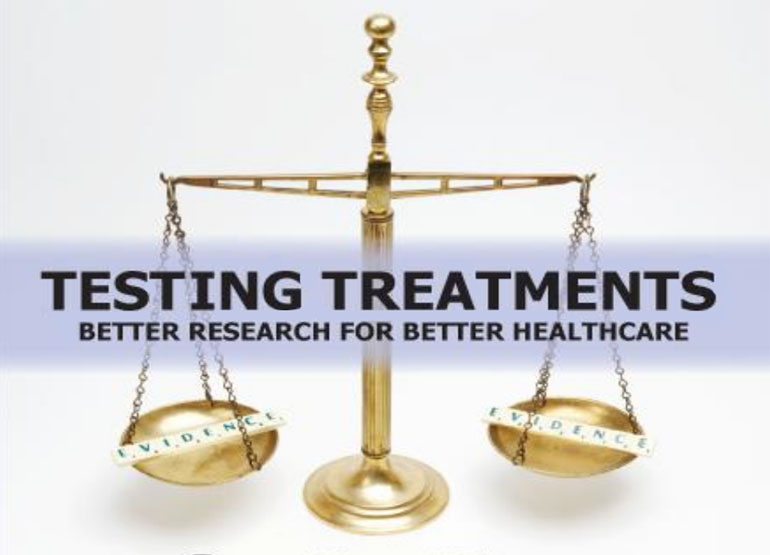
Make your first step today, download FREE book "Testing Treatments" (pdf format) and learn more. This great book was published by The British Library. It has been encouragingly well received, translated into several languages, and adopted as a course book.
Back to Health Info