TRAVEL
enhance your experience...
KNOWLEDGE
make it much more comfortable...
INFORMATION
helps you to find things...

RomWell Travel Advisory
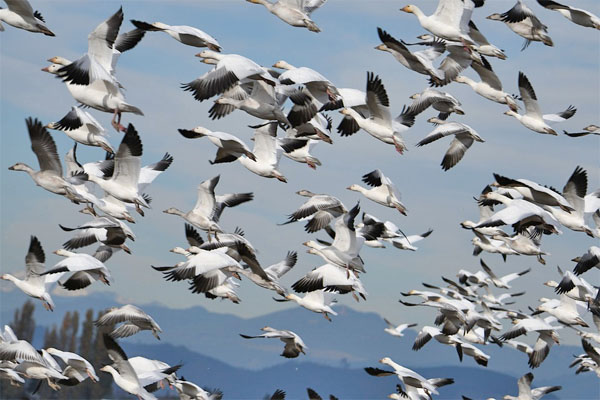
Light geese are notorious for having “commitment issues” with any decoy spread. Seeming to understand a shotgun's maximum range, they drift left or right just beyond shooters’ capabilities.
Being a successful Spring-goose hunter means having the ability and knowledge to get geese in close. Use these helpful tactics to get birds to lock-on decoys, and stay locked-on.
1. While most light goose hunters still use 1000 or more decoys in a field, using as little as 300-400 can work under ideal conditions.
2. Any combination of full bodies, shells, silhouettes, wind socks and rags will work for light geese.
3. Mobility during the Spring light goose season offers hunters more options on any given day. Sticking with a majority of wind socks and rags, mixed with a limited number of full bodies, shells, and silhouettes allows hunters to be able to set up, breakdown and move quickly. Finicky birds will use a different feeding and roosting areas every day if they feel threatened.
4. Depending on the spread’s size, the most widely used technique is to arrange them in the “J” or fish hook shape. Hunters position themselves at the top or the hook’s eyelet, with the wind at their backs.
5. Keep decoys clustered closely together, and possibly even having several large clusters of decoys throughout a field imitating concentrated feeding in certain areas.
6. Motion within the spread is vital and will help to lure the weary birds within gun range even if it’s just to take a look at the motion staked decoy, flags, kites, or pull-string flappers.
7. When using flags, don’t hesitate to use several, as large concentrations of snow geese tend to move quite a bit when feeding. The flags hovering just above the ground create a realism of either landing geese or geese hopping over each another.
8. Kites offer the same realism as flags, and using them at different lengths can give hovering geese the image that several flocks are wanting into the particular field.
9. Calling: The legal use of electronic callers during Spring hunts changes calling tactics for some, but many experienced hunters prefer to use a combination of electronic callers and traditional calling.
10. Staying concealed within the spread is a must. Utilize pit blinds and layout blinds, and some hunters wear white jackets with hoods and sit among the decoys.
Article Source: Ducks Unlimited Inc.
Ducks Unlimited conserves, restores and manages wetlands and associated habitats for North America's waterfowl. These habitats also benefit other wildlife and people. Visit their web site at www.ducks.org to learn more, support their mission or to find more info.

Surprise your loved ones with great craft creations, decorate your house, or make unique gifts for any occasion and create ultimate gift giving experience. Save money, spend a quality time with your dearest ones, and have fun doing great craft for any occasion!
Find out more