
Fondues
Welcome your guests with a hot fondue
Fondue Tips
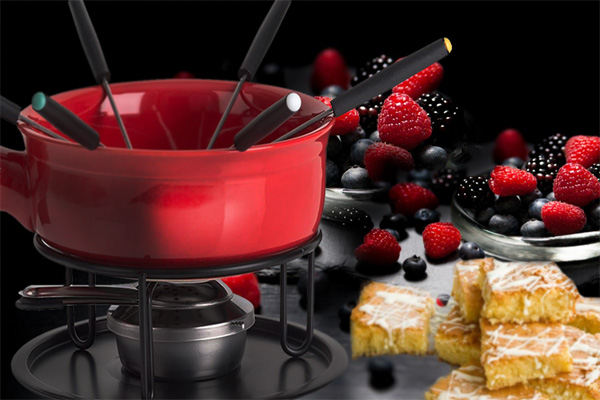
Caramel Fondue
Caramel Fondue can be prepared few hours ahead...
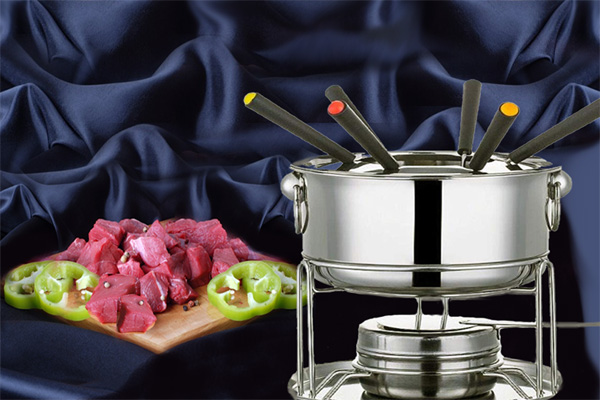
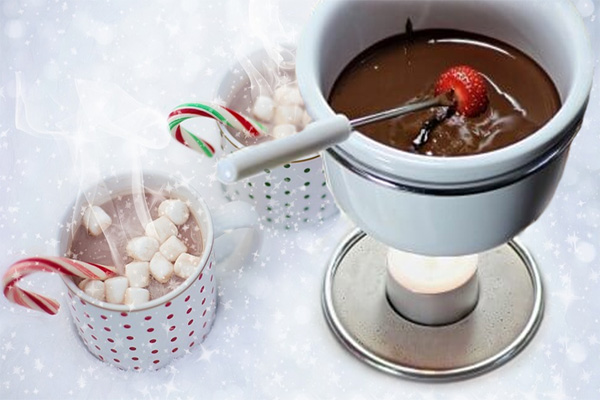
Almond Fondue
This can be great recipe for holiday entertaining...
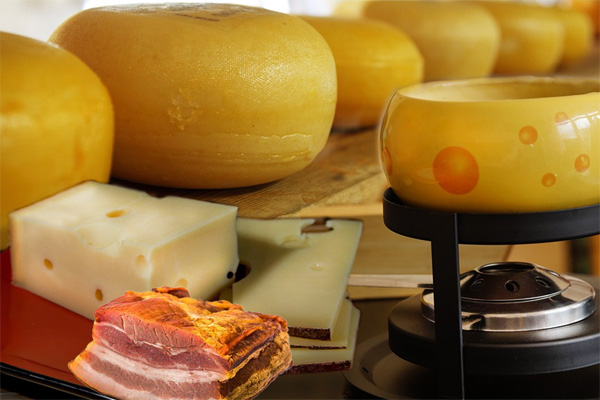
Cheese and Bacon Fondue
This tasty fondue is great when served with assorted...

RomWell Cookbook
Discover various delicious and useful recipes...Did You Know?
The earliest record of a fondue is a recipe for a sauce made from Pramnos wine, grated goat's cheese and white flour that appears in Scroll 11 (lines 629-645) of Homer's Iliad.
Swiss communal fondue arose many centuries ago as a result of food preservation methods. The Swiss food staples bread and raclette-like cheese made in summer and fall were meant to last throughout the winter months. The bread aged, dried out and became so tough it was sometimes chopped with an axe. The stored cheese also became very hard, but when mixed with wine and heated it softened into a thick sauce. During Switzerland's long, cold winters some families and extended groups would gather about a large pot of cheese set over the fire and dip wood-hard bits of bread which quickly became edible.
Modern fondue originated during the 18th century in the canton of Neuchâtel. As Switzerland industrialized, wine and cheese producers encouraged the dish's popularity. By the 20th century many Swiss cantons and even towns had their own local varieties and recipes based on locally available cheeses, wines and other ingredients.
During the 1950s a slowing cheese industry in Switzerland widely promoted fondue since one person could easily eat half a pound of melted cheese in one sitting.
In 1955, the first pre-mixed "instant" fondue was brought to market.
Fondue became popular in the United States during the mid-1960s after American tourists discovered it in Switzerland.
Dessert fondue recipes began appearing in the 1960s. Slices of fruit or pastry are dipped in a caquelon of melted chocolate. Other dessert fondues can include coconut, honey, caramel and marshmallow.