
Books
The Brontë Sisters
SELECTIONS FROM THE LITERARY REMAINS OF ELLIS BELL
BY CURRER BELL
It would not have been difficult to compile a volume out of the papers left by my sisters, had I, in making the selection, dismissed from my consideration the scruples and the wishes of those whose written thoughts these papers held. But this was impossible: an influence, stronger than could be exercised by any motive of expediency, necessarily regulated the selection. I have, then, culled from the mass only a little poem here and there. The whole makes but a tiny nosegay, and the colour and perfume of the flowers are not such as fit them for festal uses.
It has been already said that my sisters wrote much in childhood and girlhood. Usually, it seems a sort of injustice to expose in print the crude thoughts of the unripe mind, the rude efforts of the unpractised hand; yet I venture to give three little poems of my sister Emily's, written in her sixteenth year, because they illustrate a point in her character.
At that period she was sent to school. Her previous life, with the exception of a single half-year, had been passed in the absolute retirement of a village parsonage, amongst the hills bordering Yorkshire and Lancashire. The scenery of these hills is not grand--it is not romantic it is scarcely striking. Long low moors, dark with heath, shut in little valleys, where a stream waters, here and there, a fringe of stunted copse. Mills and scattered cottages chase romance from these valleys; it is only higher up, deep in amongst the ridges of the moors, that Imagination can find rest for the sole of her foot: and even if she finds it there, she must be a solitude-loving raven--no gentle dove. If she demand beauty to inspire her, she must bring it inborn: these moors are too stern to yield any product so delicate. The eye of the gazer must ITSELF brim with a "purple light," intense enough to perpetuate the brief flower-flush of August on the heather, or the rare sunset-smile of June; out of his heart must well the freshness, that in latter spring and early summer brightens the bracken, nurtures the moss, and cherishes the starry flowers that spangle for a few weeks the pasture of the moor-sheep. Unless that light and freshness are innate and self-sustained, the drear prospect of a Yorkshire moor will be found as barren of poetic as of agricultural interest: where the love of wild nature is strong, the locality will perhaps be clung to with the more passionate constancy, because from the hill-lover's self comes half its charm.
My sister Emily loved the moors. Flowers brighter than the rose bloomed in the blackest of the heath for her; out of a sullen hollow in a livid hill-side her mind could make an Eden. She found in the bleak solitude many and dear delights; and not the least and best loved was--liberty.
Liberty was the breath of Emily's nostrils; without it, she perished. The change from her own home to a school, and from her own very noiseless, very secluded, but unrestricted and inartificial mode of life, to one of disciplined routine (though under the kindliest auspices), was what she failed in enduring. Her nature proved here too strong for her fortitude. Every morning when she woke, the vision of home and the moors rushed on her, and darkened and saddened the day that lay before her. Nobody knew what ailed her but me--I knew only too well. In this struggle her health was quickly broken: her white face, attenuated form, and failing strength, threatened rapid decline. I felt in my heart she would die, if she did not go home, and with this conviction obtained her recall. She had only been three months at school; and it was some years before the experiment of sending her from home was again ventured on. After the age of twenty, having meantime studied alone with diligence and perseverance, she went with me to an establishment on the Continent: the same suffering and conflict ensued, heightened by the strong recoil of her upright, heretic and English spirit from the gentle Jesuitry of the foreign and Romish system. Once more she seemed sinking, but this time she rallied through the mere force of resolution: with inward remorse and shame she looked back on her former failure, and resolved to conquer in this second ordeal. She did conquer: but the victory cost her dear. She was never happy till she carried her hard-won knowledge back to the remote English village, the old parsonage-house, and desolate Yorkshire hills. A very few years more, and she looked her last on those hills, and breathed her last in that house, and under the aisle of that obscure village church found her last lowly resting-place. Merciful was the decree that spared her when she was a stranger in a strange land, and guarded her dying bed with kindred love and congenial constancy.
The following pieces were composed at twilight, in the school- room, when the leisure of the evening play-hour brought back in full tide the thoughts of home.

Related Links:
 Biographical Notice of Ellis and Acton Bell
Browse Quotes and Proverbs...

Cool Quotes Vol. 1
If silence is golden, then speech is platinum...

Cool Quotes Vol. 2
If you are too careful, you are so occupied in being...

Cool Quotes Vol. 3
The only time to eat DIET FOOD is while you're waiting...

Wise Old Sayings
One today is worth two tomorrows...
Browse Aesop's Fables...
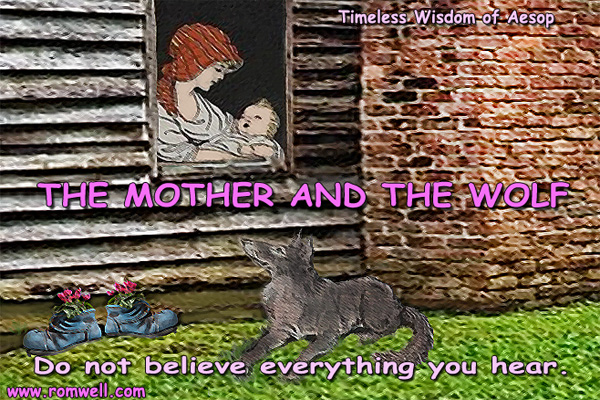
The Mother and the Wolf
Do not believe everything you hear.
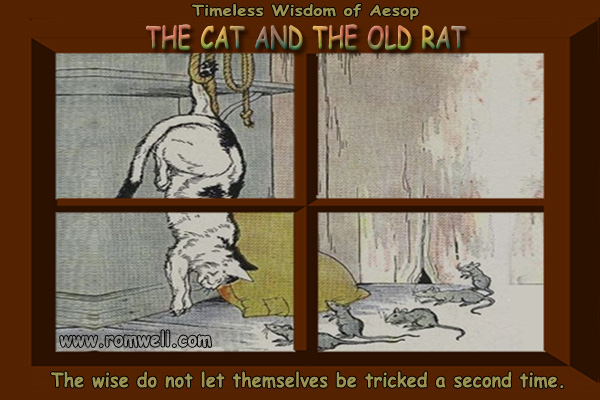
The Cat and the Old Rat
The wise do not let themselves be tricked a second time.
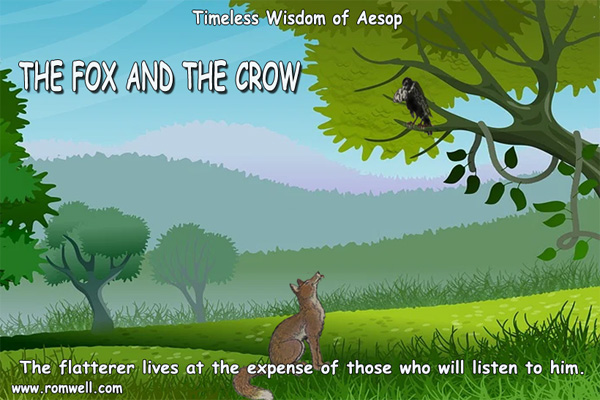
The Fox and the Crow
The flatterer lives at the expense of those who will...
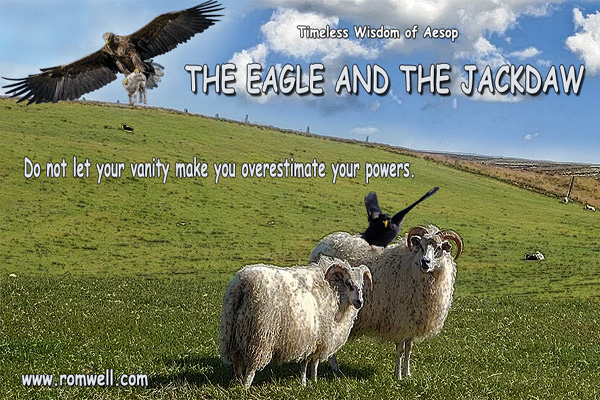
The Eagle and the Jackdaw
Do not let your vanity make you overestimate your powers.
Education Pages
We live in democratic and progressive society, so every student must be educated for leadership as well as for obedience. Every student must have power of self-direction and power of directing others, power of administration, ability to assume positions of responsibility. This necessity of educating for leadership is as great on the industrial as on the political side and gives opportunity for positive personal achievement. >>> Learn more...Binge Drinking
A “binge” is a pattern of drinking alcohol that brings blood alcohol concentration (BAC) to 0.08 gram percent or above. For the typical adult, this pattern corresponds to consuming 5 or more drinks (male), or 4 or more drinks (female), in about 2 hours. Binge drinking is clearly dangerous for the drinker and for society. For some individuals (e.g., older people or people taking other drugs or certain medications), the number of drinks needed to reach a bingelevel BAC is lower than for the "typical adult".
RomWell Craft Pages
Surprise your loved ones with great craft creations, decorate your house, or make unique gifts for any occasion and create ultimate gift giving experience. Save money, spend a quality time with your dearest ones, and have fun doing great craft for any occasion!
Find out more
Browse RomWell Real Cooking