
Books
The Brontë Sisters
Biographical Notice of Ellis and Acton Bell
It has been thought that all the works published under the names of Currer, Ellis, and Acton Bell were, in reality, the production of one person. This mistake I endeavoured to rectify by a few words of disclaimer prefixed to the third edition of ‘Jane Eyre.’ These, too, it appears, failed to gain general credence, and now, on the occasion of a reprint of ‘Wuthering Heights’ and ‘Agnes Grey,’ I am advised distinctly to state how the case really stands.
Indeed, I feel myself that it is time the obscurity attending those two names - Ellis and Acton - was done away. The little mystery, which formerly yielded some harmless pleasure, has lost its interest; circumstances are changed. It becomes, then, my duty to explain briefly the origin and authorship of the books written by Currer, Ellis, and Acton Bell.
About five years ago, my two sisters and myself, after a somewhat prolonged period of separation, found ourselves reunited, and at home. Resident in a remote district, where education had made little progress, and where, consequently, there was no inducement to seek social intercourse beyond our own domestic circle, we were wholly dependent on ourselves and each other, on books and study, for the enjoyments and occupations of life. The highest stimulus, as well as the liveliest pleasure we had known from childhood upwards, lay in attempts at literary composition; formerly we used to show each other what we wrote, but of late years this habit of communication and consultation had been discontinued; hence it ensued, that we were mutually ignorant of the progress we might respectively have made.
One day, in the autumn of 1845, I accidentally lighted on a MS. volume of verse in my sister Emily’s handwriting. Of course, I was not surprised, knowing that she could and did write verse: I looked it over, and something more than surprise seized me - a deep conviction that these were not common effusions, nor at all like the poetry women generally write. I thought them condensed and terse, vigorous and genuine. To my ear they had also a peculiar music - wild, melancholy, and elevating.
My sister Emily was not a person of demonstrative character, nor one on the recesses of whose mind and feelings even those nearest and dearest to her could, with impunity, intrude unlicensed; it took hours to reconcile her to the discovery I had made, and days to persuade her that such poems merited publication. I knew, however, that a mind like hers could not be without some latent spark of honourable ambition, and refused to be discouraged in my attempts to fan that spark to flame.
Meantime, my younger sister quietly produced some of her own compositions, intimating that, since Emily’s had given me pleasure, I might like to look at hers. I could not but be a partial judge, yet I thought that these verses, too, had a sweet, sincere pathos of their own.
We had very early cherished the dream of one day becoming authors. This dream, never relinquished even when distance divided and absorbing tasks occupied us, now suddenly acquired strength and consistency: it took the character of a resolve. We agreed to arrange a small selection of our poems, and, if possible, to get them printed. Averse to personal publicity, we veiled our own names under those of Currer, Ellis, and Acton Bell; the ambiguous choice being dictated by a sort of conscientious scruple at assuming Christian names positively masculine, while we did not like to declare ourselves women, because - without at that time suspecting that our mode of writing and thinking was not what is called ‘feminine’ - we had a vague impression that authoresses are liable to be looked on with prejudice; we had noticed how critics sometimes use for their chastisement the weapon of personality, and for their reward, a flattery, which is not true praise.
The bringing out of our little book was hard work. As was to be expected, neither we nor our poems were at all wanted; but for this we had been prepared at the outset; though inexperienced ourselves, we had read the experience of others. The great puzzle lay in the difficulty of getting answers of any kind from the publishers to whom we applied. Being greatly harassed by this obstacle, I ventured to apply to the Messrs. Chambers, of Edinburgh, for a word of advice; they may have forgotten the circumstance, but I have not, for from them I received a brief and business-like, but civil and sensible reply, on which we acted, and at last made a way.
The book was printed: it is scarcely known, and all of it that merits to be known are the poems of Ellis Bell. The fixed conviction I held, and hold, of the worth of these poems has not indeed received the confirmation of much favourable criticism; but I must retain it notwithstanding.
Ill-success failed to crush us: the mere effort to succeed had given a wonderful zest to existence; it must be pursued. We each set to work on a prose tale: Ellis Bell produced ‘Wuthering Heights,’ Acton Bell ‘Agnes Grey,’ and Currer Bell also wrote a narrative in one volume. These MSS. were perseveringly obtruded upon various publishers for the space of a year and a half; usually, their fate was an ignominious and abrupt dismissal.
At last ‘Wuthering Heights’ and ‘Agnes Grey’ were accepted on terms somewhat impoverishing to the two authors; Currer Bell’s book found acceptance nowhere, nor any acknowledgment of merit, so that something like the chill of despair began to invade her heart. As a forlorn hope, she tried one publishing house more - Messrs. Smith, Elder and Co. Ere long, in a much shorter space than that on which experience had taught her to calculate - there came a letter, which she opened in the dreary expectation of finding two hard, hopeless lines, intimating that Messrs. Smith, Elder and Co. ‘were not disposed to publish the MS.,’ and, instead, she took out of the envelope a letter of two pages. She read it trembling. It declined, indeed, to publish that tale, for business reasons, but it discussed its merits and demerits so courteously, so considerately, in a spirit so rational, with a discrimination so enlightened, that this very refusal cheered the author better than a vulgarly expressed acceptance would have done. It was added, that a work in three volumes would meet with careful attention.
I was then just completing ‘Jane Eyre,’ at which I had been working while the one-volume tale was plodding its weary round in London: in three weeks I sent it off; friendly and skilful hands took it in. This was in the commencement of September, 1847; it came out before the close of October following, while ‘Wuthering Heights’ and ‘Agnes Grey,’ my sisters’ works, which had already been in the press for months, still lingered under a different management.
They appeared at last. Critics failed to do them justice. The immature but very real powers revealed in ‘Wuthering Heights’ were scarcely recognised; its import and nature were misunderstood; the identity of its author was misrepresented; it was said that this was an earlier and ruder attempt of the same pen which had produced ‘Jane Eyre.’ Unjust and grievous error! We laughed at it at first, but I deeply lament it now. Hence, I fear, arose a prejudice against the book. That writer who could attempt to palm off an inferior and immature production under cover of one successful effort, must indeed be unduly eager after the secondary and sordid result of authorship, and pitiably indifferent to its true and honourable meed. If reviewers and the public truly believed this, no wonder that they looked darkly on the cheat.
Yet I must not be understood to make these things subject for reproach or complaint; I dare not do so; respect for my sister’s memory forbids me. By her any such querulous manifestation would have been regarded as an unworthy and offensive weakness.
It is my duty, as well as my pleasure, to acknowledge one exception to the general rule of criticism. One writer, endowed with the keen vision and fine sympathies of genius, has discerned the real nature of ‘Wuthering Heights,’ and has, with equal accuracy, noted its beauties and touched on its faults. Too often do reviewers remind us of the mob of Astrologers, Chaldeans, and Soothsayers gathered before the ‘writing on the wall,’ and unable to read the characters or make known the interpretation. We have a right to rejoice when a true seer comes at last, some man in whom is an excellent spirit, to whom have been given light, wisdom, and understanding; who can accurately read the ‘Mene, Mene, Tekel, Upharsin’ of an original mind (however unripe, however inefficiently cultured and partially expanded that mind may be); and who can say with confidence,‘This is the interpretation thereof.
Yet even the writer to whom I allude shares the mistake about the authorship, and does me the injustice to suppose that there was equivoque in my former rejection of this honour (as an honour I regard it). May I assure him that I would scorn in this and in every other case to deal in equivoque; I believe language to have been given us to make our meaning clear, and not to wrap it in dishonest doubt?
‘The Tenant of Wildfell Hall,’ by Acton Bell, had likewise an unfavourable reception. At this I cannot wonder. The choice of subject was an entire mistake. Nothing less congruous with the writer’s nature could be conceived. The motives which dictated this choice were pure, but, I think, slightly morbid. She had, in the course of her life, been called on to contemplate, near at hand, and for a long time, the terrible effects of talents misused and faculties abused: hers was naturally a sensitive, reserved, and dejected nature; what she saw sank very deeply into her mind; it did her harm. She brooded over it till she believed it to be a duty to reproduce every detail (of course with fictitious characters, incidents, and situations), as a warning to others. She hated her work, but would pursue it. When reasoned with on the subject, she regarded such reasonings as a temptation to self-indulgence. She must be honest; she must not varnish, soften, nor conceal. This well-meant resolution brought on her misconstruction, and some abuse, which she bore, as it was her custom to bear whatever was unpleasant, with mild, steady patience. She was a very sincere, and practical Christian, but the tinge of religious melancholy communicated a sad shade to her brief, blameless life.
Neither Ellis nor Acton allowed herself for one moment to sink under want of encouragement; energy nerved the one, and endurance upheld the other. They were both prepared to try again; I would fain think that hope and the sense of power were yet strong within them. But a great change approached; affliction came in that shape which to anticipate is dread; to look back on, grief. In the very heat and burden of the day, the labourers failed over their work.
My sister Emily first declined. The details of her illness are deep-branded in my memory, but to dwell on them, either in thought or narrative, is not in my power. Never in all her life had she lingered over any task that lay before her, and she did not linger now. She sank rapidly. She made haste to leave us. Yet, while physically she perished, mentally she grew stronger than we had yet known her. Day by day, when I saw with what a front she met suffering, I looked on her with an anguish of wonder and love. I have seen nothing like it; but, indeed, I have never seen her parallel in anything. Stronger than a man, simpler than a child, her nature stood alone. The awful point was, that while full of ruth for others, on herself she had no pity; the spirit was inexorable to the flesh; from the trembling hand, the unnerved limbs, the faded eyes, the same service was exacted as they had rendered in health. To stand by and witness this, and not dare to remonstrate, was a pain no words can render.
Two cruel months of hope and fear passed painfully by, and the day came at last when the terrors and pains of death were to be undergone by this treasure, which had grown dearer and dearer to our hearts as it wasted before our eyes. Towards the decline of that day, we had nothing of Emily but her mortal remains as consumption left them. She died December 19, 1848.
We thought this enough: but we were utterly and presumptuously wrong. She was not buried ere Anne fell ill. She had not been committed to the grave a fortnight, before we received distinct intimation that it was necessary to prepare our minds to see the younger sister go after the elder. Accordingly, she followed in the same path with slower step, and with a patience that equalled the other’s fortitude. I have said that she was religious, and it was by leaning on those Christian doctrines in which she firmly believed, that she found support through her most painful journey. I witnessed their efficacy in her latest hour and greatest trial, and must bear my testimony to the calm triumph with which they brought her through. She died May 28, 1849.
What more shall I say about them? I cannot and need not say much more. In externals, they were two unobtrusive women; a perfectly secluded life gave them retiring manners and habits. In Emily’s nature the extremes of vigour and simplicity seemed to meet. Under an unsophisticated culture, inartificial tastes, and an unpretending outside, lay a secret power and fire that might have informed the brain and kindled the veins of a hero; but she had no worldly wisdom; her powers were unadapted to the practical business of life; she would fail to defend her most manifest rights, to consult her most legitimate advantage. An interpreter ought always to have stood between her and the world. Her will was not very flexible, and it generally opposed her interest. Her temper was magnanimous, but warm and sudden; her spirit altogether unbending.
Anne’s character was milder and more subdued; she wanted the power, the fire, the originality of her sister, but was well endowed with quiet virtues of her own. Long-suffering, self-denying, reflective, and intelligent, a constitutional reserve and taciturnity placed and kept her in the shade, and covered her mind, and especially her feelings, with a sort of nun-like veil, which was rarely lifted. Neither Emily nor Anne was learned; they had no thought of filling their pitchers at the well-spring of other minds; they always wrote from the impulse of nature, the dictates of intuition, and from such stores of observation as their limited experience had enabled them to amass. I may sum up all by saying, that for strangers they were nothing, for superficial observers less than nothing; but for those who had known them all their lives in the intimacy of close relationship, they were genuinely good and truly great.
This notice has been written because I felt it a sacred duty to wipe the dust off their gravestones, and leave their dear names free from soil.
CURRER BELL
September 19, 1850.
Related Links:
 Editor's Preface to the New Edition of 'Wuthering Heights'
Browse Quotes and Proverbs...

Cool Quotes Vol. 1
If silence is golden, then speech is platinum...
Cool Quotes Vol. 2
If you are too careful, you are so occupied in being...

Cool Quotes Vol. 3
The only time to eat DIET FOOD is while you're waiting...

Wise Old Sayings
One today is worth two tomorrows...
Browse Aesop's Fables...
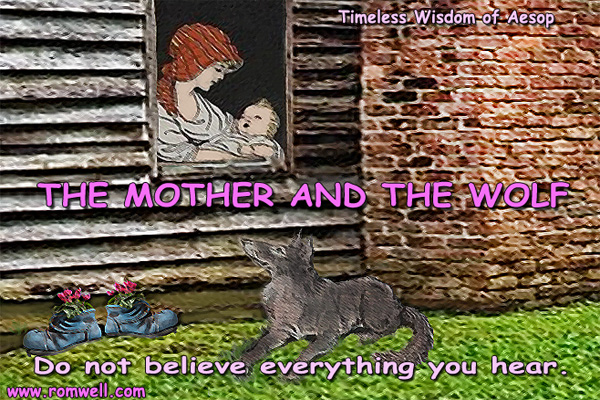
The Mother and the Wolf
Do not believe everything you hear.
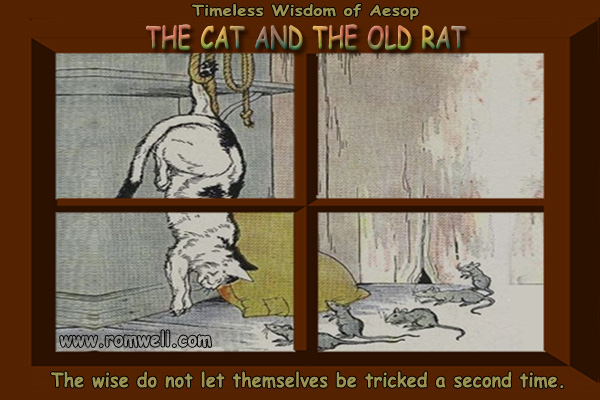
The Cat and the Old Rat
The wise do not let themselves be tricked a second time.
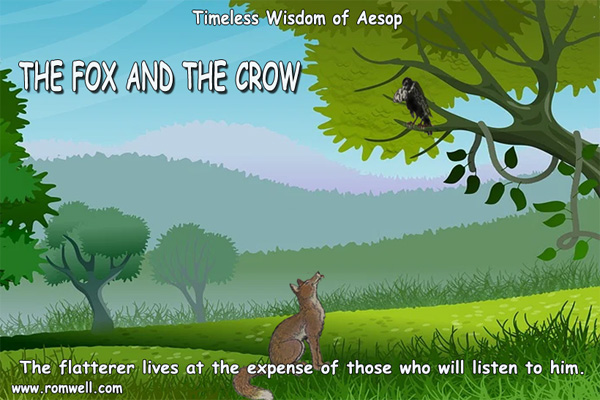
The Fox and the Crow
The flatterer lives at the expense of those who will...
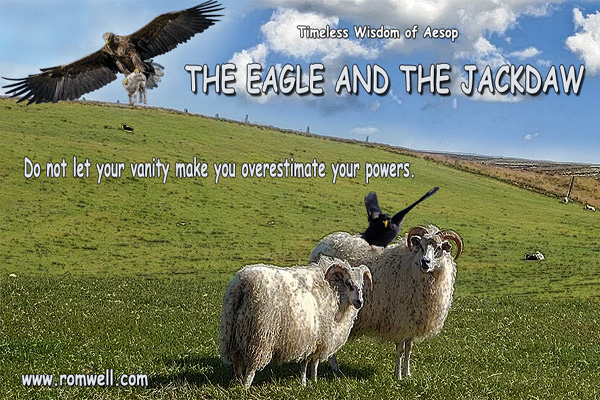
The Eagle and the Jackdaw
Do not let your vanity make you overestimate your powers.
Education Pages
We live in democratic and progressive society, so every student must be educated for leadership as well as for obedience. Every student must have power of self-direction and power of directing others, power of administration, ability to assume positions of responsibility. This necessity of educating for leadership is as great on the industrial as on the political side and gives opportunity for positive personal achievement. >>> Learn more...Antioxidants
Organic antioxidants help to promote cell regeneration, they are a great all natural way to help boost your immune system, and flush out harmful toxins which weaken the immune system. They are essential aid to a properly balanced diet, overall health and wellness and also great help in the prevention of disease.
RomWell Craft Pages
Surprise your loved ones with great craft creations, decorate your house, or make unique gifts for any occasion and create ultimate gift giving experience. Save money, spend a quality time with your dearest ones, and have fun doing great craft for any occasion!
Find out more
Browse RomWell Real Cooking